
Insights · 24 Nov 2026
AI Field Service Dispatch in Saudi Arabia: Fixing Routing, First Time Fix Rates and SLA Control
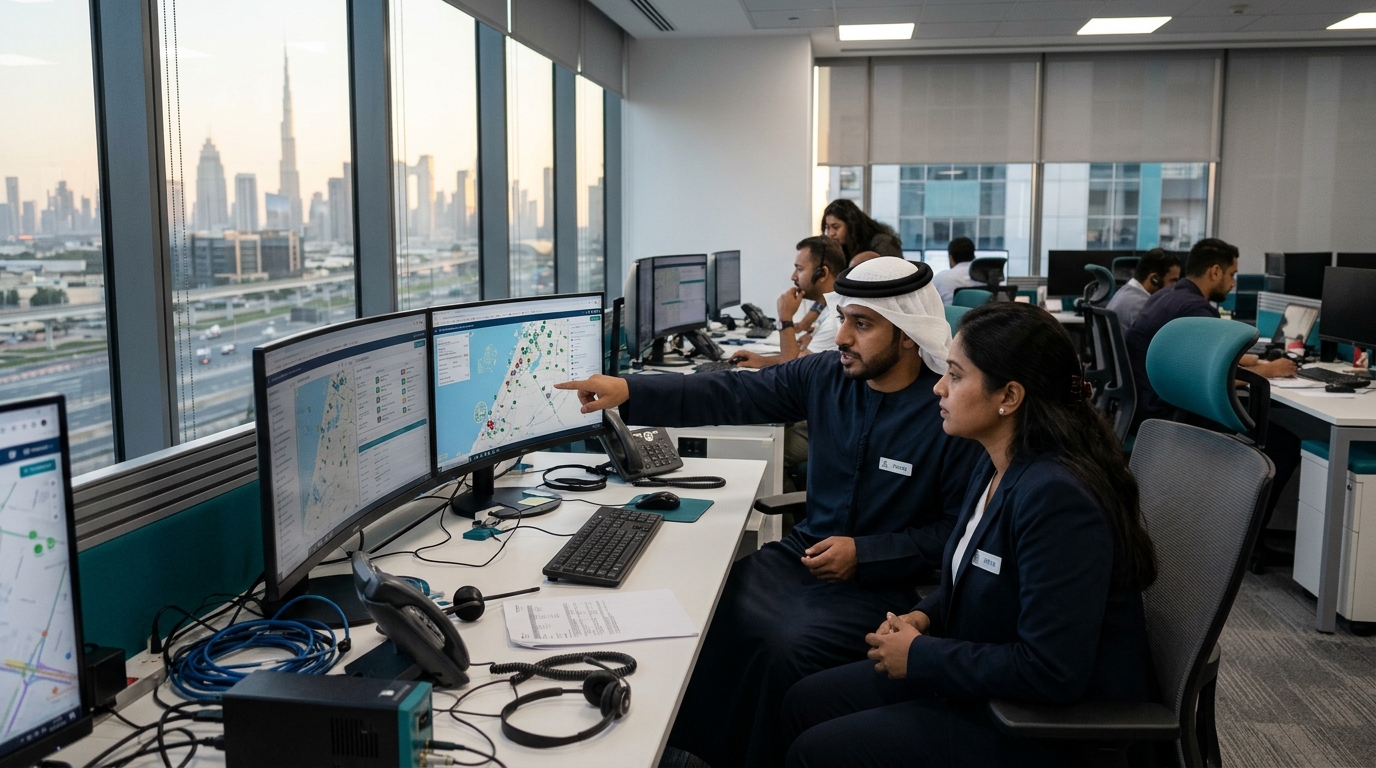
Field service operators across Saudi Arabia are targeting up to 25% reductions in technician travel time and fuel spend with AI dispatch. Here is the operational discipline required across work order intake, skill matching, and spare parts control so AI routing delivers sustained first time fix gains.
Across Saudi Arabia, field service organisations managing HVAC, industrial equipment, telecoms, facilities maintenance, and commercial fleets are under mounting pressure to cover wider territories with tighter Service Level Agreements (SLAs). In Saudi Arabia, field service companies are utilising AI to optimise technician dispatch routes, reducing travel time and fuel costs by 25%. This improvement enhances customer satisfaction by ensuring timely service delivery and maximises technician productivity.
Yet many operations directors discover an uncomfortable reality within weeks of switching on an AI scheduling module: optimising the driving route to the wrong job, with the wrong technician certification or a missing spare part, simply gets your team to a failed visit faster. We help companies optimise operations before applying AI.
1. Why AI Route Optimisation Alone Does Not Fix Field Dispatch
In high growth metros and industrial corridors across Riyadh, Jeddah, and the Eastern Province, long driving distances, congested urban zones, and tight access windows make technician travel time one of the largest controllable cost lines on a service P&L. Automated routing promises immediate relief, often targeting 20% to 25% reductions in daily travel time and fuel consumption.
However, dispatch algorithms are only as reliable as the upstream operational data feeding them. When a field service organisation layers software onto an informal workflow, three predictable failure modes emerge:
- Garbage in, faster mistakes out: If a customer reports a fault by phone or WhatsApp and the coordinator logs a vague one line note, the routing engine cannot predict true job duration or technical complexity. - Schedule collapse by mid morning: One misclassified repair that runs two hours over budget cascades across every downstream appointment on that technician's route, forcing dispatchers back onto manual phone calls and spreadsheets. - Hidden repeat truck rolls: Travel distance per single visit looks slightly lower on paper, while total fleet mileage climbs because technicians must return the next day with the correct component or specialist licence.
2. The Four Hidden Bottlenecks Draining Technician Productivity
Before configuring automated scheduling rules, our field audits across GCC maintenance and technical service fleets consistently uncover four root causes of operational waste:
### Unstructured Work Order Intake Customer requests arrive across WhatsApp groups, call centres, client portals, and direct calls to account managers. Essential details such as asset serial number, site access permit requirements, fault symptoms, and contract SLA tier are captured inconsistently, leaving dispatchers to chase basic facts while technicians sit idle.
### Technician Skill and Certification Mismatches Many service teams track specialist credentials, OEM authorisations, and site safety clearances inside individual supervisors' heads rather than a live matrix. An AI engine that routes purely by GPS proximity will assign the nearest technician rather than the certified technician legally permitted to work on that asset.
### Van Stock and Spare Parts Blind Spots Across industrial and commercial maintenance fleets, missing parts are the primary driver of failed first time fixes. If dispatch software cannot verify whether the required replacement part sits in the technician's van or at a nearby regional depot before confirming the slot, automated routing simply accelerates incomplete visits.
### Reactive Dispatcher Firefighting Without clear priority rules separating contractual emergency callouts from routine preventive maintenance, every urgent client call overrides the daily schedule. Dispatchers spend their shifts reacting to escalations rather than supervising route adherence and technician utilisation.
3. Three Operational Controls to Lock Before Enabling AI Dispatch
To capture genuine travel, fuel, and productivity gains in Saudi Arabia, operations leaders should lock three practical readiness gates before activating automated routing:
1. Gate 1: Mandatory Fault and Asset Intake Taxonomy. Replace free text job tickets with a concise, standardised fault tree tied to customer asset classes, standard job duration bands, and mandatory site access checks. Every inbound channel, including WhatsApp and call centre desks, must populate these fields before a ticket enters the dispatch queue. 2. Gate 2: Explicit SLA Triage and Skill Matrix. Codify contractual response tiers (emergency, urgent, standard, preventive) alongside a verified technician skill, certification, and zone coverage register. AI routing rules must treat safety clearances and asset certifications as hard constraints, never soft preferences. 3. Gate 3: Pre Dispatch Spare Parts and Van Stock Rules. Map the top 20 recurring fault codes to standard parts kits and establish automated stock checks against van inventories and regional stores prior to job release. If a required component is out of stock, the workflow triggers parts reservation before dispatching a vehicle.
4. Comparing Dispatch Operating Models
### Work Order Intake Quality - Manual Dispatch: Informal calls, WhatsApp messages, and incomplete notes requiring constant coordinator follow up. - Software Only AI Rollout: Free text tickets pushed directly into scheduling algorithms, creating inaccurate job durations and schedule slippage. - Torrevie Standardised FSM Approach: Structured intake taxonomy with mandatory asset, fault code, and site access fields captured before routing.
### Technician Matching and Route Execution - Manual Dispatch: Relies on supervisor memory and static area assignments, causing uneven workloads and heavy daily mileage. - Software Only AI Rollout: Optimises GPS proximity without full visibility of OEM certifications, site permits, or parts readiness. - Torrevie Standardised FSM Approach: Combines hard skill, SLA, and van stock constraints with AI route clustering and manager approved exception handling.
### Operational KPIs and Governance - Manual Dispatch: Monthly retrospective spreadsheets with limited visibility into repeat visits or true wrench time. - Software Only AI Rollout: Software dashboards ignored by supervisors once daily schedule overrides accumulate. - Torrevie Standardised FSM Approach: Weekly floor governance tracking first time fix rate, travel to wrench ratio, SLA compliance, and jobs per technician per shift.
5. Practical 90 Day Rollout and KPI Governance
Successful field service transformation does not require a twelve month IT overhaul. High performing service operators in Saudi Arabia follow a disciplined 90 day operational sequence:
- Days 1 to 30 (Baseline and Intake Discipline): Audit 90 days of closed work orders to isolate top fault codes, repeat visit drivers, and regional travel waste across Riyadh, Jeddah, and the Eastern Province. Standardise fault intake fields, SLA tiers, and the technician certification matrix. - Days 31 to 60 (Pilot Zone with Manager Approved AI Routing): Enable AI route suggestions across one high volume service region or business unit. Let dispatch supervisors review and approve automated schedules each morning so the team builds trust while edge cases are refined. - Days 61 to 90 (Parts Alignment and Fleet Wide Scale): Link pre dispatch parts checks to top fault categories and roll the governed dispatch cadence across all territories, backed by five weekly operational metrics: First Time Fix Rate (FTFR), Travel to Wrench Time Ratio, SLA Breach Percentage, Completed Jobs per Technician per Shift, and Fuel Cost per Completed Work Order.
When the underlying dispatch discipline is clean, AI stops being another underused software licence and becomes a dependable engine for lower fleet costs, stronger technician morale, and higher customer retention.
Frequently Asked Questions
Why do AI field service dispatch tools fail when deployed without workflow standardisation in Saudi Arabia?
Routing algorithms rely on clean fault codes, accurate job duration estimates, verified technician certifications, and confirmed parts availability. When work orders still arrive through unstructured WhatsApp messages or phone calls, AI schedules the wrong technician or omits critical parts, increasing repeat visits instead of reducing travel time.
What operational controls should be locked before enabling automated technician routing?
Operators should lock three controls first: a mandatory structured fault and asset intake taxonomy, an explicit SLA priority and technician certification matrix, and a pre dispatch van stock and warehouse parts check tied to recurring fault codes.
How quickly can a field service team measure travel time and first time fix improvements?
Most mid to large service fleets across Riyadh, Jeddah, Dubai, and the Eastern Province can establish a clean intake baseline in 30 days, run manager approved AI route recommendations by day 60, and track measurable reductions in travel time, fuel spend, and SLA breaches by day 90.
Does AI dispatch replace experienced field service dispatchers?
No. The highest adoption across GCC service operations happens when AI handles route clustering, traffic sequencing, and shift balancing while experienced dispatchers retain final exception approval for VIP contracts, emergency callouts, and complex multi technician jobs.
Optimize. Execute. Scale.
Want to talk through how this applies to your business?
Book a call