
Insights · 31 Jul 2026 · 3 min read
From 78 Percent to 97 Percent OTIF: A GCC Distribution Transformation
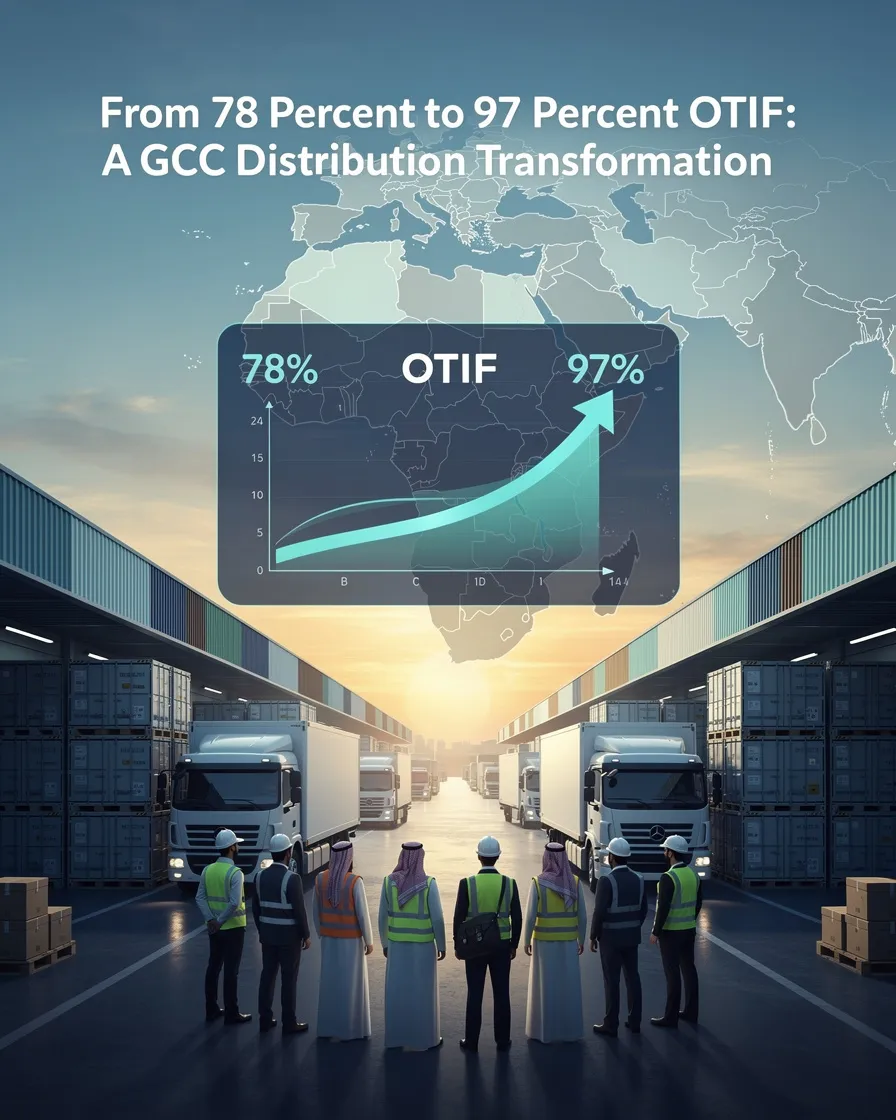
How a GCC distributor used an AI exception engine to move from 78 percent to 97 percent OTIF across 14 markets in just 12 months.
The Logic of the Exception Engine: Moving from 78 Percent to 97 Percent OTIF
Operating a distribution hub in the Jebel Ali Free Zone requires managing a unique set of variables. When that hub serves 14 different regional markets, the complexity does not just add up. It multiplies.
A GCC distribution business recently faced this exact challenge. Their On Time In Full (OTIF) rate sat at 78 percent. In a market where customer expectations are rising and competition is fierce, 78 percent is a dangerous number. It means one in every five customers is disappointed. It means management time is consumed by firefighting rather than growth.
The typical response to poor delivery performance is to hire more coordinators. The assumption is that more eyes on the problem will lead to fewer failures. However, more people often just leads to more spreadsheets and more disconnected WhatsApp threads.
The Problem with Manual Tracking
At 78 percent OTIF, the business was stuck in a reactive loop. They only discovered an order was delayed when the customer called to complain. By then, the opportunity to fix the issue had passed.
The data existed within their ERP system, but it was buried. No human could track 200 open orders across 14 markets and identify which one was about to fail due to a supplier delay or a logistics bottleneck. The team was managing by volume, not by exception.
Building the Exception Engine
Torrevie moved the business from manual tracking to an AI supported exception engine. The goal was to remove the burden of monitoring every order and instead focus senior staff only on the orders at risk.
We implemented a system that assigned a delivery confidence score to every transaction. By analyzing historical supplier performance, current transit times, and internal processing speeds, the AI could predict a failure before it happened.
If an order for Riyadh was flagged with a low confidence score because a specific component was delayed at the port, the engine raised an exception. It did not just report the problem. It assigned it to an owner and suggested a specific action.
The Shift in Operational Governance
The transition from 78 percent to 97 percent was not just about the technology. It was about how the team used the information.
With the exception engine in place, the daily operations meeting changed. Instead of reviewing every order, the team spent 20 minutes discussing the 15 flagged exceptions. They went from looking backward at what went wrong to looking forward at what needed fixing.
This shift in governance, supported by real time data visibility, allowed the business to scale without increasing headcount. They were no longer hiring coordinators to watch spreadsheets. They were empowering operators to manage risks.
The Result: 97 Percent OTIF
Within 12 months, the results were definitive. The business achieved a 97 percent OTIF rate across all 14 markets.
This improvement was delivered through a structured operational transformation: 1. Process Audit: We identified exactly where the communication gaps existed between the JAFZA hub and the regional markets. 2. Data Visibility: We replaced manual tracking with a live control tower view of all active orders. 3. Exception Management: We deployed AI to flag deviations from the delivery plan before they became failures.
Torrevie combines senior operational leadership with the capability to build the AI tools that make performance sustainable. We do not just provide a report. We deliver the result.
Visit torrevie.com to learn how our diagnostic first approach fixes the floor of your operations.
Want to talk through how this applies to your business?
Book a call